

I Lost Myself
...and found something better.

As there are a notable amount of new subscribers, (where did you all come from?), I’d like to reintroduce myself: my name is Piper, I’m 22, and I recently earned my bachelor’s in philosophy and will be starting my master’s this fall. I run an online literary magazine, which brings me a great deal of fulfillment and connects me with many incredible writers whom I’d otherwise never meet. On Substack, I write about whatever I want when I want, though this usually amounts to a personal essay published on a Sunday morning. Though it sounds cliché, I hope you will take me at my word when I say that I don’t take for granted having any readership for my work. Hearing that any of my writing has an impact on someone, however small, is always a delight. Thank you for reading.
Dear reader,
I am at that very tender age where everyone older is always emphasizing the importance of finding one’s purpose, though always given with some form of disclamatory reassurance that either it’s okay if you haven’t yet found yours or, more dauntingly, if you think you’ve found yours, prepare to be wrong. A very similar remark was made by the speaker at my graduation, who talked about how graduating college feels a lot like falling. While I appreciated the sentiment, I felt, at least when I first heard it, exempted.
Much to the chagrin of philosophy students everywhere, the two phrases from the field that have breached containment for misappropriation everywhere are “I think, therefore I am” (or, the cogito) and the perhaps even more misunderstood quote “the unexamined life is not worth living.” The latter has made its way onto at least half a dozen of my holiday/birthday cards, and iterations of the phrase in cursive script always serve as a haunting reminder rather than a thoughtful nod to my interests.
The unexamined life is not worth living.
I was sure that in the “floor is lava” post-graduation shuffle, I’d found my solid land without too much scrambling. Though I’d resigned myself to the possibility that I might not attend graduate school, I ultimately decided between an opportunity in New York City and near Boston. I, of course, chose Boston.1 I hoped that knowing I’d return to a city I love so much would provide me some relief, some assurance that my life was headed in a direction that felt right to me, and that maybe the pain I’d been through was worth it in the end.
Senior year was exceptionally challenging for me, but it shouldn’t have been a surprise given that my prior three years were no difference: namely, because of multiple and mostly untimely deaths, and also divorce and dissolution of the family structures that I grew up with. Of course, the process of working through those difficulties are not a one-and-done process, but at least they were over. Senior year didn’t offer me the chaos of the world outside more than it offered me the chaos in the world inside of myself. Entrenched in what I could only understand as a “dark night of the soul,” all of the meaning I’ve invented to keep me going could no longer be accessed. For someone who was spending a good deal of her time trying to understand how people derive meaning from their lives, I could not extrapolate much from mine. As winter found its footing, I became fairly certain that if I were not to go on at all, the lives of those around me wouldn’t really change and, if anything, that they might even be better.
Then, a month later, things were different.
There’s a saying in Portland that if you don’t like the weather, just wait another five minutes. That’s what I kept doing. I don’t know how things work out exactly, but sometimes they just do. I don’t know how exactly I made it through the semester, but I just did. Only a month after my most difficult moment, I felt more secure in my new friend group. One of these friends, Tess, even became my girlfriend. I mostly left the social scene that filled me with anxiety to participate in, preferring instead to spend time with people whom I knew for certain loved and appreciated me. I had a new routine. My weather would get worse again, and then a little better.
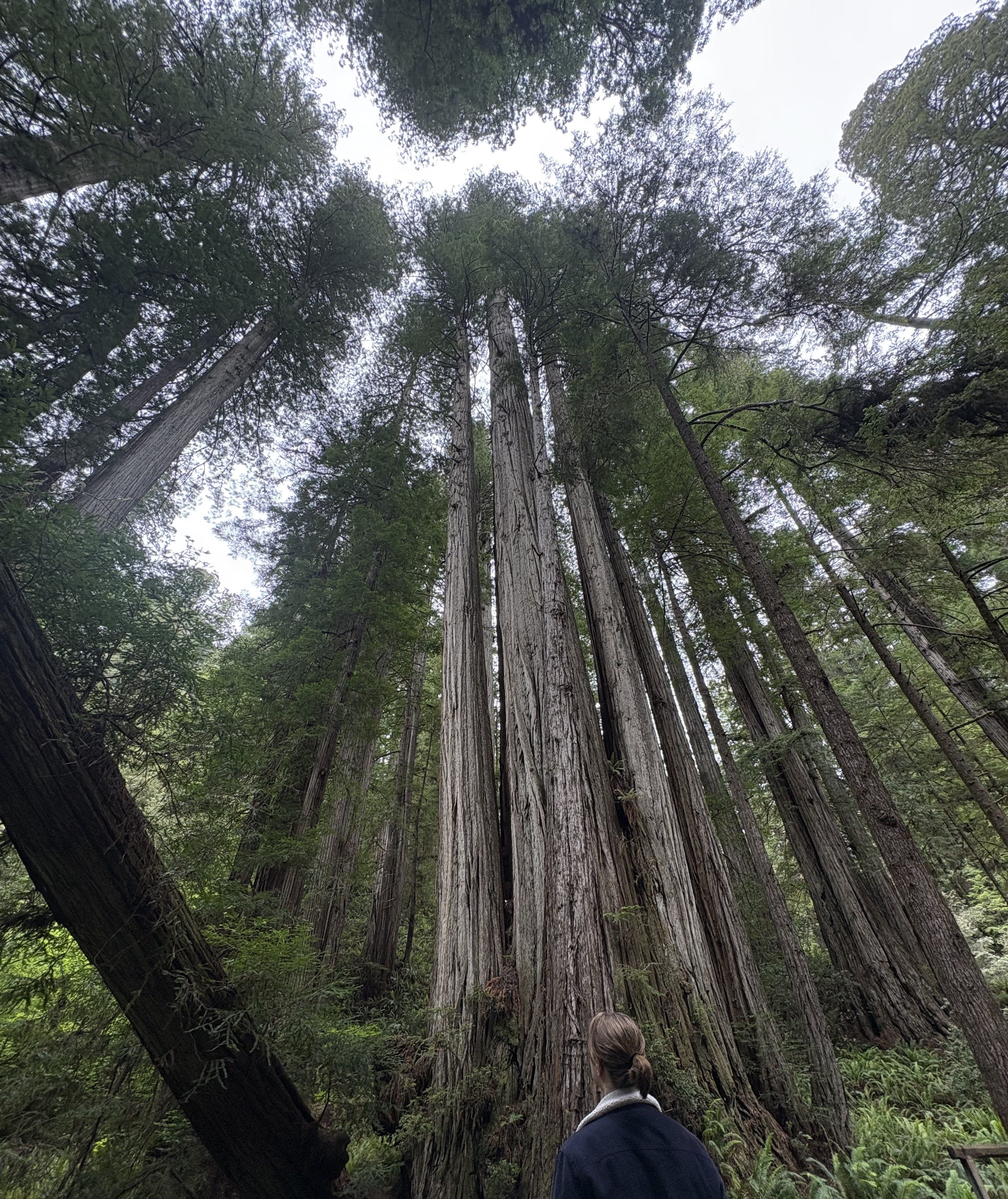
Graduation offered an ending that I finally felt ready for. It didn’t feel rushed or belated, which felt like a win for someone who attended four different high schools before dropping out and left my first college for greener pastures. I love my college, but love is always complex, and for all the reasons there is to love something, there is always something not to love. I paid for my education in my health, both physical and mental, and learned time and again that the limit does exist for me, though I ignored it and kept pushing until I couldn’t push any longer. On our immediate post-graduation hike to the hot springs, I found myself crying endlessly. Hugging Tess, I told her how badly I wanted my mommy, while acknowledging how that’s a very strange thing to say because my mother died eighteen years ago. Given the circumstance, one could imagine that it’s also a very strange thing to feel. More than a desire for a mother as such, what I felt was a desire for my source, my origin, and to be able to come back to it for comfort. What I wanted was to feel like myself again.
I wrote my thesis on personal identity, focusing on how people understand themselves and move toward change. What I’ve become convinced of is that there is no metaphysical self. Sure, I believe in a soul, whatever that is, that something will survive me though my body will one day not… but I don’t think that’s the same as a self. I don’t think that a consciousness is equatable, and certainly not our sets of animal impulses that compel us toward certain pleasures or repel us from pains to varying degrees of success. Daniel Dennett compares the self to a center of gravity, a “theorist’s fiction.” Maybe we can’t touch the self, but that doesn’t mean that it’s not there.
So, what it is that I am, exactly? What it is that I’m I looking for when I look for myself? Though I understand what Descartes meant by I think, therefore I am— that when I doubt the world around me, I needn’t also doubt that there is something there doubting, something there thinking— I have come to believe that I think, therefore I become. As Paul advises us, “Finally, brethren, whatever is true, whatever is honorable, whatever is just, whatever is pure, whatever is lovely, whatever is gracious, if there is any excellence, if there is anything worthy of praise, think about these things.”2 Still, all I could find myself thinking about were the things that I feared, the things that I knew probably weren’t true, weren’t right, and weren’t lovely. I became so consumed by anxiety that I hardly felt human, incessantly examining every event I could remember of my life while trying to figure out what type of person I’ve proved myself to be. Through all this inquiry, I seemed good, but the thought that I was wrong, or the many people who’ve loved me are all wrong, followed me.
The only thing that stopped my spiral was asking myself what it would mean if I was wrong, even if I knew somewhere inside that I wasn’t. The phrase “the unexamined life is not worth living” calls us to look at our lives, but it doesn’t tell us what to do with what we find. I have a zealous commitment to the idea that people can change. I believe that the biggest inhibitors of change are the ideas we have about who we have to be. Sometimes, we come up with these ideas by ourselves. Most of the time, the world tells us who we’re supposed to be before we can even decide for ourselves.3 Of course, popular wisdom pushes us toward examining our lives through the lens of values that we take for granted as universally understood like truth, or justice, or goodness; but as anyone who has seriously examined questions like “what is truth?”, “what is justice?”, or “what is goodness?” can tell you, there are few easy answers.
What I can tell you is that the more time I spend thinking about how I live my life, the more that I change. Once I put more thought to it, I lost the desire to eat meat.4 I lost the desire to drink, for that matter.5 I started being more mindful with the ways that I mindlessly spend money, like by cancelling my Netflix subscription (that I wasn’t really using) and directing the money instead toward a charitable cause rather than some corporation.6 When I go to say something that I already feel is unnecessary or unkind, I try to correct myself out loud.7 Not everyone will believe that all of these are undoubtedly good things, but I feel justified in believing that they are. There are some good things that I have always been inclined toward, like vulnerability, seeing the good in others, and being forgiving, that are often good but can be bad under the wrong circumstances or when taken advantage of by the wrong people. Knowing how and when to be vulnerable, to see the good, or to be forgiving takes experience, which only living can give.

Of course, I don’t write about some of these changes to convince other people that I’m so good or get some sort of recognition; I’m writing about them because they’re astoundingly easy things to do for their positive impact that it seems insane to me that I wasn’t doing them before. I also don’t spend my time feeling obsessively guilty and repentant about the way I used to live, like the fact that I used to eat meat. Change doesn’t usually come from radical come-to-Jesus moments where you have to die to yourself and the world before you suddenly know how to be a perfect saint. Change is the little thing you do differently today. I hope to keep doing little things differently today, tomorrow, and for the rest of my life. I hope never to be satisfied as I am, and to continue to keep challenging myself to analyze the things that I believe and do, just as Socrates prescribed. I hope to never become attached to some idea of myself that prevents me from becoming something better.
A side effect of this inquiry, though, caused me to worry that I was somehow on the wrong path, and that I could do more good elsewhere. That fear culminated in the idea that maybe I’m not meant to be in philosophy, and that there’s something else that God wants me to do and I’m selfishly ignoring some sign from above. Ultimately, my friends convinced me that my dedication and love for philosophy means that I’m bound to do something worthwhile; and, that obsessing over the “right” thing to do is a waste of the time that I could be spending on making an impact while doing something that’s fulfilling to me.8
One of the problems I’ve had with academic philosophy is that I can look up from many of the conclusions I draw and find that my life hasn’t really changed. As Hume points out, it’s a good thing that our nature lets us get away from our skepticism. For example, if I spent all my time consumed by the problem of induction, I would never set foot in an airplane, a boat, or a car, for that matter.9 And, people would call that a mental illness, not a philosophical position. Though as a woman in philosophy I’ve shied away from ethics, mostly worried that I’d be pigeonholed because of my gender, I’ve started to embrace that interest more. I want my work to be useful. I want to do something or write something that changes someone for the better. I’ve started reading books that address the concrete rather than remain in the abstract.10 I’ve started to think about the sorts of problems that are out there that I, if I put my mind to it, might even be able to solve.
I don’t mind that I’ve lost my “self” because I think I’ve found something better: what I can become. Of course, as I start a new journey, I have worries that maybe I’ll fail, that maybe I won’t be able to achieve the things that I want to, and maybe I’ll feel isolated, unwanted, or embarrassed sometimes. At least when I do, I can lose myself again. I can keep changing my life and moving past old selves until it feels like it’s worth living again. I keep meditating on Joan of Arc’s statement, “I am not afraid; I was born to do this.” I can’t tell you what it is exactly that I believe I am meant to do, and sometimes that feels a lot like falling. I also know that at least I’m going in the direction of purpose, and hope that I will be ready for wherever it takes me.
Until next time,
Piper
To be clear, my decision regarding where to attend graduate school was not made solely on the basis that I wanted to be in the Boston area. That would be ridiculous… and I was certainly pleased that my top choice also happened to be in Boston.
Philippians 4:8 (RSV)
For example, see the countless examples of misogynistic and heteronormative children’s clothes online.
Among other things, I believe that less suffering is better than more suffering. I believe that eating meat causes more suffering. What made me really lose the desire to eat meat was that I thought about the fact that I found certain types of meat gross over others because I’d been conditioned to find, for example, horse meat strange but to find cow meat normal. Once I realized that there wasn’t a meaningful distinction between the sources, I found it all weird. Also, a steak takes something like 600 gallons of water to make. If I’m going to complain about AI data centers taking so much of our water, I should at least be doing something to reduce my own water usage. When I tell people that I don’t eat meat anymore (in settings where it’s relevant, like when I want dinner), sometimes people react very emotionally for reasons that I haven’t figured out. Maybe it’s worth thinking about further.
The main reason why people justify drinking is that it makes them more sociable, but I don’t generally need to drink to be sociable. Also, scientists are beginning to discover that any amount of drinking causes brain damage, and I don’t feel the need to regularly damage my brain. I really like the taste of gin, and some places serve Tanqueray 0.0 or other alcohol alternatives that are decent. I’ll still drink on occasion, but I find less inclined to just because everyone else is.
charitywatch.org is a great resource to find charities that are most effective in using your donations. GiveWell is also another great source. Though I have some problems with effective altruistic thinking, I do try to pick causes that I believe are more immediately important… so, sorry, shrimp welfare project. Two places I’ve donated to after finding them on CharityWatch are RAINN, which supports victims of sexual violence and has an A- rating, and MuslimAid, a faith-based organization that has an A rating. MuslimAid offers an option to specifically support those suffering in Palestine, but also offers aid to Venezuela, Yemen, and more causes. You also don’t have to be super rich to make an impact on someone’s life. Sometimes charities even tell you how exactly your donation can impact someone’s life. For example, the Against Malaria Foundation shows how only $2 is enough to make an impact, and that’s an amount almost everyone can spare. They also tell you on the donation page where exactly your money went and how many people were impacted. One of my donations went toward malaria nets in the Ivory Coast!
Enough people have opinions on Taylor Swift’s wedding or whatever big thing we all want to dunk on at the moment. I don’t need to add my two cents. My indulgences are now more occasional. I also don’t need to beat dead horses about past circumstances or people whom I’ve lost some respect for. Either way, I’ve come to find that most people hurt people, whether intentionally or unintentionally, out of illness or insecurity, and I don’t need to make them suffer more than they already are; nor do I need to show how ill and insecure I can be by hurting someone else myself.
If you’re thinking, “Holy shit! This lady has some serious OCD!”, you’d be correct. I’m usually fine, though.
I am specifically referring to Hume’s Treatise, but you can read more about this problem of philosophy at the SEP: https://plato.stanford.edu/entries/induction-problem/.
One of these books that I highly recommend includes The Tyranny of Merit by Michael Sandel.